If your pipeline depends on someone remembering to send the next email, update the CRM, and follow up three times before a prospect goes cold, you do not have a lead generation system. You have a labor problem. That is why more companies are asking what is AI powered lead generation and whether it can actually replace manual prospecting work instead of just assisting it.
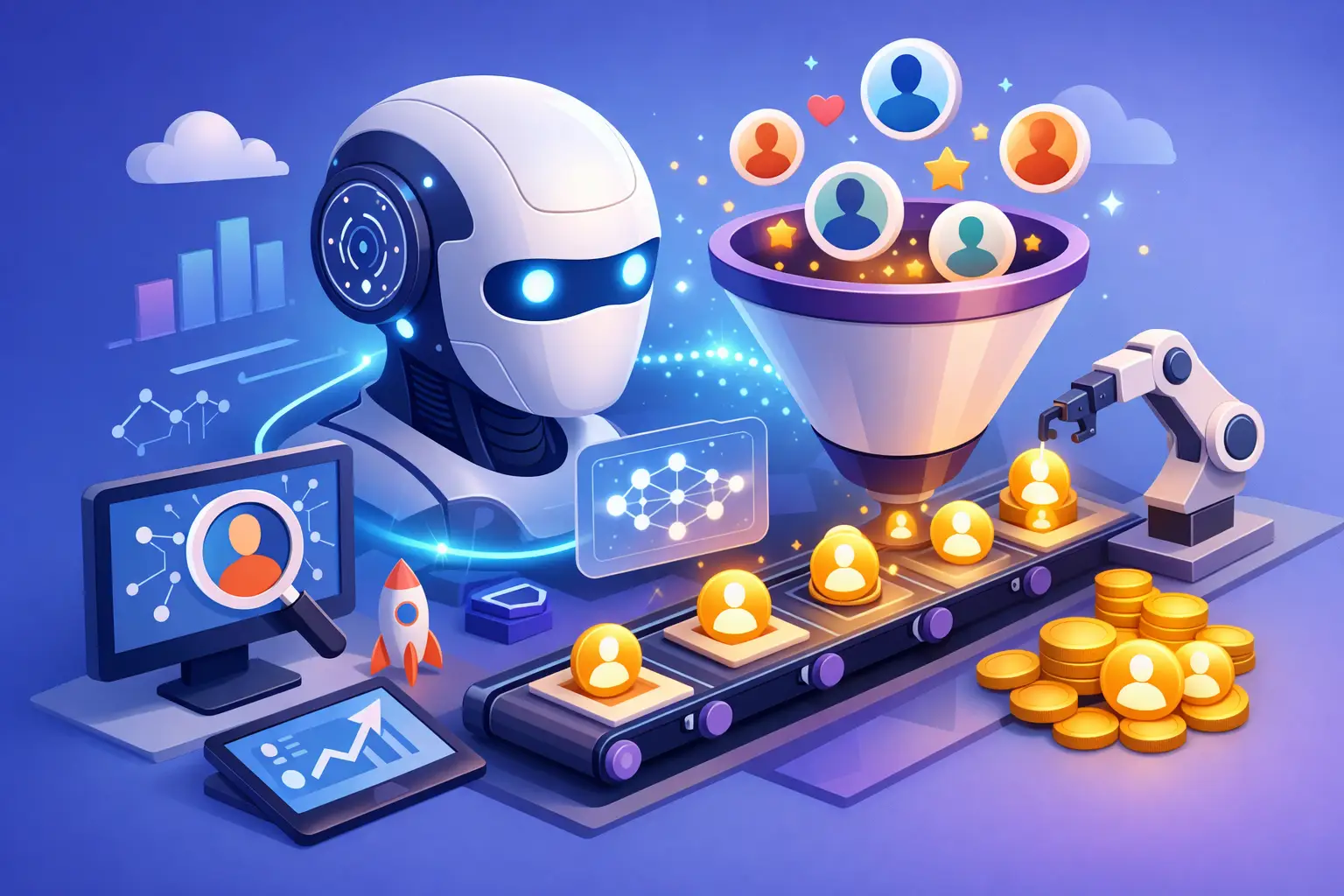
The short answer is simple. AI-powered lead generation uses software and AI agents to identify potential buyers, reach out at scale, qualify interest, and move leads toward a booked meeting or sales conversation with far less human effort.
The better answer is that it changes how pipeline gets built. Instead of relying on SDRs to manually research contacts, write outreach, track replies, and chase follow-ups, AI handles a large share of the repetitive execution. Your team spends less time pushing messages out and more time closing deals.
What is AI powered lead generation in practice?
In practice, AI powered lead generation is not one tool. It is a system.
That system usually starts with targeting. AI can help identify the right people or companies based on industry, role, geography, buying signals, online behavior, or historical conversion patterns. From there, it can generate personalized outreach, send messages across channels, monitor replies, score intent, and book meetings when a prospect is ready.
A basic setup might only automate email prospecting. A more advanced setup acts like a full outbound engine. It can run outreach around the clock, adjust follow-up timing, respond to common questions, and hand qualified opportunities to a sales rep only when real interest appears.
That difference matters. Plenty of businesses think they are using AI for lead generation because they use a writing assistant for cold emails. That is not the same thing as an AI-driven pipeline system. Real AI-powered lead generation handles workflow, decision-making, and execution across multiple stages.
How AI powered lead generation actually works
Most systems follow the same operating logic, even if the software looks different.
First, the system builds or refines your ideal prospect list. It looks at firmographic data, demographics, job titles, market segments, prior wins, and sometimes behavioral intent signals. The goal is not to collect the most leads. The goal is to find the leads most likely to convert.
Next comes outreach execution. AI can write first-touch emails, tailor messaging by segment, rotate follow-up sequences, and keep cadence consistent. That alone solves one of the biggest sales problems in small and mid-sized businesses: inconsistency. Teams usually do not fail because they have zero prospects. They fail because outreach happens in bursts, then stalls.
Then comes qualification. When replies start coming in, AI can categorize them. Some contacts are interested. Some are not a fit. Some need follow-up later. Some ask pricing or availability questions. Instead of making a rep sort through every response manually, AI can route or respond based on rules and context.
Finally, the system moves qualified leads to the next step. That could mean booking a demo, scheduling a call, or assigning the lead to a closer. The strongest systems reduce the lag between interest and action. In lead generation, speed is not a nice extra. It directly affects conversion.
Why businesses are shifting to AI-led prospecting
The appeal is not hype. It is economics.
Hiring, training, and managing SDRs is expensive. Even when you build a capable team, output often depends on individual discipline. One rep follows up well. Another forgets. One writes strong messaging. Another burns leads with generic outreach. The cost stays fixed while quality varies.
AI-powered lead generation changes that model. It gives businesses a way to scale activity without scaling headcount at the same rate. More outreach goes out. More follow-ups happen on time. More leads get touched without adding the usual operational drag.
This is especially attractive for founders, agencies, real estate teams, and sales-led startups that need pipeline now, not six months from now after building an internal SDR function. They are not looking for experimental AI features. They want booked conversations and lower acquisition friction.
That said, AI is not a magic switch. If your offer is weak, your targeting is off, or your market is saturated, automating bad outreach just creates bad outreach faster. The system still needs strategy behind it.
Where AI performs best and where it does not
AI performs best in environments where lead generation depends on repeatable actions. Prospect identification, outbound messaging, follow-up sequences, response handling, appointment setting, and CRM updates are all strong use cases.
It also performs well when speed and persistence matter. Many businesses lose opportunities because nobody follows up after the first touch or because leads wait too long for a reply. AI does not get busy, forget, or log off at 5 p.m. That always-on execution is a real advantage.
Where it becomes less effective is in highly relationship-driven sales that depend on deep trust from the first interaction or in markets where data quality is poor. AI can help start conversations, but high-value enterprise deals, complex partnerships, or nuanced local relationships may still need heavier human involvement earlier in the process.
There is also a messaging ceiling. AI can personalize at scale, but not every version of personalization is meaningful. Mentioning a prospect's city or job title is easy. Showing real market understanding is harder. Good systems combine automation with clear positioning and strong offer design.
The difference between AI assistance and AI lead generation
This is where many buyers get misled.
A chatbot on your website is not a lead generation engine by itself. Neither is an email writer, a contact database, or a CRM add-on with an AI label. Those are features.
AI-powered lead generation is broader. It is the coordinated use of AI to drive the entire front end of pipeline creation, from prospect discovery to outreach to qualification to booked meetings. If the software still depends on your team to manually stitch everything together, it is helping the process, not running the process.
That distinction matters because the ROI changes. Assistance tools save some time. Agent-based systems can replace major chunks of manual sales development work.
For businesses trying to reduce SDR overhead, that is the real benchmark. Not whether AI makes reps slightly faster, but whether it can reliably produce conversations without requiring constant human management.
What to look for in an AI lead generation system
The best system is not the one with the most features. It is the one that creates qualified sales activity with the least operational friction.
Start with targeting quality. If the platform cannot help you reach the right audience, the rest does not matter. Then look at outreach flexibility. You want messaging that can adapt by segment, offer, and channel instead of blasting one generic sequence to everyone.
Response handling is another major factor. Some tools can send messages, but they break once prospects reply. That creates more inbox work for your team. A stronger setup can interpret replies, route leads correctly, and keep momentum moving.
You should also pay attention to booking and handoff. If the system generates interest but makes scheduling clunky, conversion drops. The handoff from AI to human should feel fast and clean.
Finally, measure outcomes, not activity alone. Open rates and send volume can look impressive while pipeline stays flat. The useful metrics are qualified replies, meetings booked, show rates, and revenue influence.
What is AI powered lead generation worth to a growing company?
Its value depends on what is currently broken.
If your team already has a disciplined outbound machine, AI may improve efficiency and reduce labor cost. If your prospecting is inconsistent, AI can create structure and execution where there was none. If you are relying on one founder or one sales rep to carry the top of funnel, the impact can be much bigger because it removes a growth bottleneck.
For small and mid-sized businesses, the biggest gain is usually not just volume. It is consistency. Consistent outreach. Consistent follow-up. Consistent appointment setting. That is what creates a more predictable pipeline.
For example, an AI outbound engine like Apps2Grow's Pipeline Pilot is valuable not because it sounds advanced, but because it takes a job that usually requires people, process management, and constant oversight, then compresses it into a system built to keep prospecting active every day.
That is the practical answer to the question. What is AI powered lead generation? It is a way to turn lead generation from a stop-start manual task into an always-on revenue function.
The companies that benefit most are usually the ones that are tired of paying for effort and want to pay for execution. If that sounds familiar, the next step is not asking whether AI belongs in sales. It is figuring out which parts of your pipeline should stop depending on humans to remember what to do next.